-
Events
See all events here



-
Membership

Open to all those studying or working in transport planning, or related fields, on a professional basis.

Transport Planning in 2026: Delivery, Devolution and Divergence
By Nicola Kane
As Chair of the Transport Planning Society, I am often asked what the biggest challenge facing our profession is today. Funding constraints remain a persistent issue, and skills shortages continue to grow. Increasingly, however, the defining challenge is operating within a more complex and fragmented political environment, where priorities do not always align.
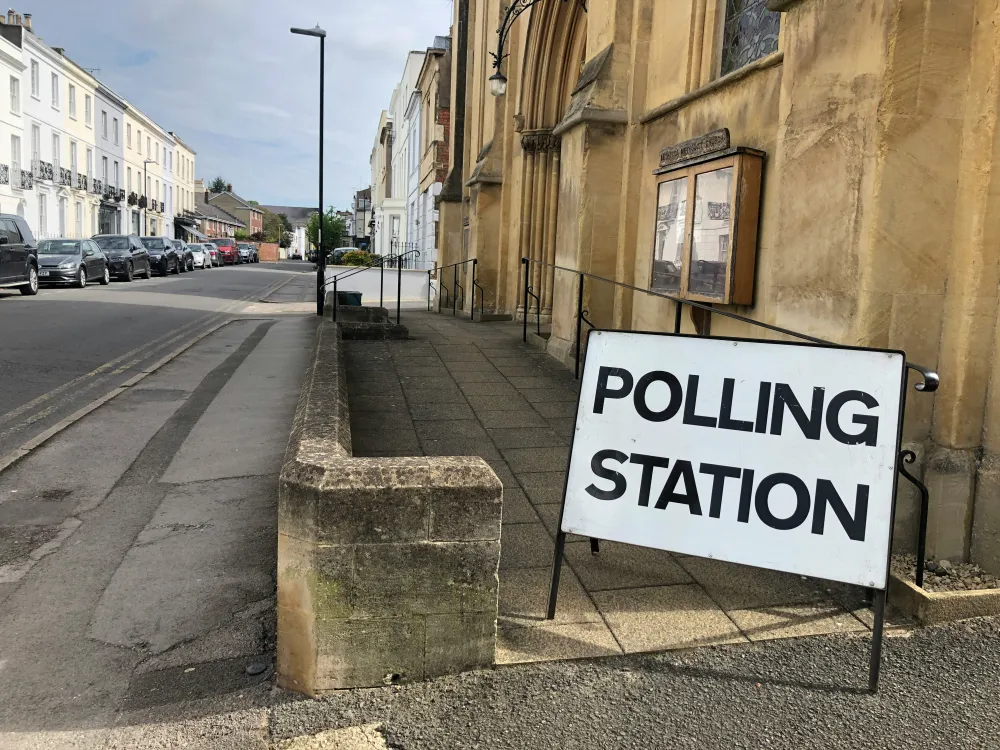
The upcoming local elections are likely to sharpen that reality. In London, current projections point to an increasingly diverse political landscape. While the city remains under the mayoral leadership of Labour’s Sadiq Khan, other parties are expected to make gains at borough level. The Conservatives may regain councils such as Wandsworth and Westminster, the Greens could advance in areas like Lambeth and Lewisham, and the Liberal Democrats are targeting places such as Merton. Similar patterns are emerging across the country, signalling a broader shift towards more politically mixed governance.
For transport planners, this creates a uniquely challenging operating context. Transport networks do not respect administrative or political boundaries, yet the decisions shaping them are increasingly influenced by localised and sometimes competing priorities. One authority may focus on rapid decarbonisation and modal shift, while a neighbouring area prioritises road capacity or more traditional approaches to economic growth. Some leaders are pushing forward ambitious active travel programmes, while others adopt a more cautious stance in response to local pressures and electoral considerations.
The result is a patchwork of approaches, with limited continuity for those tasked with planning and delivering transport systems. At times, it can feel less like a coordinated network and more like a series of disconnected strategies.
This lack of alignment has tangible consequences. Projects that rely on long-term planning and cross-boundary collaboration – such as mass transit systems or integrated ticketing – become harder to progress when political direction diverges or shifts frequently. Even maintaining momentum on existing schemes can prove challenging as new administrations revisit or reshape priorities.
At the same time, governments – particularly in England – have set out an increasingly clear and ambitious vision for a more integrated transport system through initiatives such as the Better Connected Strategy and updated Local Transport Plan guidance. These frameworks point towards a more joined-up, user-focused network, with stronger alignment between modes and places, but delivering that vision will depend heavily on local implementation as powers and funding are being increasingly devolved.
This creates a clear tension – a nationally articulated ambition for integration being delivered across a more diverse and politically varied local landscape. Designing and implementing coherent programmes of transport investment that both reflect local priorities and align with a shared national direction will therefore become significantly more complex.
All of this is unfolding against a backdrop of sustained fiscal pressure. Local and regional authorities continue to operate within tight financial constraints, forcing difficult decisions about what can be delivered, when, and at what scale. In this environment, consistency and clarity of direction are more important than ever – yet often harder to achieve.
At the same time, the sector continues to face well-documented workforce challenges. Experienced professionals are in high demand, while new entrants must navigate an increasingly complex system from the outset. Managing delivery, balancing competing priorities and maintaining progress in uncertain conditions has rarely been more demanding.
Taken together, these pressures create a demanding environment for transport planners. It can feel uncertain, at times confusing, and occasionally isolating – particularly when trying to remain evidence-led while navigating competing expectations. Yet it also underlines the importance of the role we play. Transport planning has always required us to balance economic, environmental and social outcomes; that fundamental responsibility has not changed.
What has changed is the level of divergence in local priorities, and the speed at which they evolve. Our role is not to step back from that complexity, but to work through it – bringing structure, consistency and a long-term perspective to decision-making.
This is where professional institutions have a critical role to play. In a landscape where local contexts may differ significantly, there is real value in shared spaces for professional dialogue, learning and support. The Transport Planning Society provides that platform—not only through technical guidance and professional development, but through fostering a sense of collective identity and shared purpose.
We cannot remove political uncertainty, resolve fiscal pressures overnight, or eliminate workforce challenges. But we can ensure that, as a profession, we are better equipped to respond – through collaboration, shared insight and a strong professional foundation.
As we approach these elections, whatever changes they may bring, the message is simple – stay engaged, remain evidence-led, keep sight of the long term, and recognise that this is not a challenge to navigate alone.


TPS is supported by