-
Events
See all events here



-
Membership

Open to all those studying or working in transport planning, or related fields, on a professional basis.

Transport-led growth: what the country can learn from Greater Manchester
By Nicola Kane
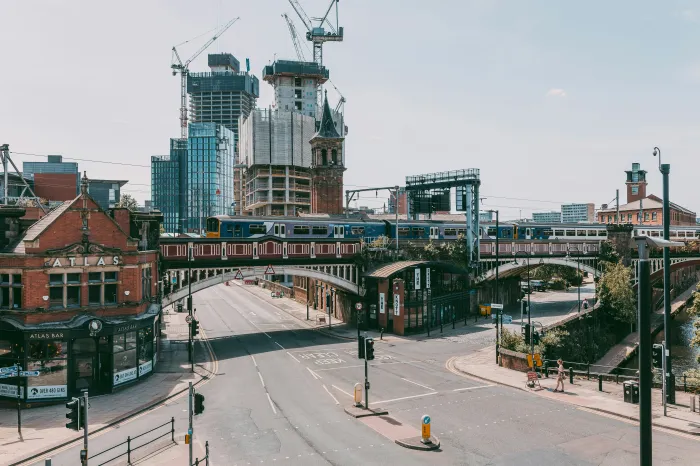
Andy Burnham's move from Greater Manchester to Downing Street has renewed attention on something transport planners have long understood: transport is not simply about moving people from A to B. It is one of the most powerful tools available to shape places, support inclusive growth and improve people’s quality of life.
Greater Manchester's Bee Network demonstrates what can be achieved when transport sits at the heart of decision-making. By creating an integrated and more locally-controlled network of public transport, walking, wheeling and cycling, the city-region has shown how better connections can unlock access to jobs, education and opportunity.
Since becoming Mayor in 2017, Burnham has made transport a defining and highly visible feature of his leadership. But the wider lesson is not about any single scheme or political programme. It is about what happens when transport is aligned with broader social, economic and environmental objectives, supporting housing delivery, economic growth, healthier communities and greater opportunity.
This is a message the Transport Planning Society has championed for many years. Transport planning has a vital role in addressing some of the country's biggest challenges, from enabling growth and delivering new homes to improving public health and meeting environmental goals. The publication of the Integrated National Transport Strategy reflects a growing recognition that these ambitions cannot be delivered in isolation.
Transport and place are inseparable. The communities we create influence how people travel, and travel choices are often determined long before a journey begins. If we are serious about sustainable growth, transport and land-use planning must be considered together from the outset.
Too often, transport investment follows development rather than enabling it. New homes should be planned alongside the infrastructure and services people need to access jobs, education, healthcare and local amenities without becoming dependent on a car. Transport shapes not only connectivity, but also physical activity, air quality, social inclusion and overall wellbeing.
People do not think in terms of transport modes or administrative boundaries. They simply want journeys that are reliable, affordable and easy to understand. True integration means more than coordinated tickets and timetables. It requires transport, planning, housing, economic development and public services to work together to create places where people can thrive.
To realise transport's full potential, we must also invest in the profession itself. Infrastructure investment must be matched by investment in skilled transport planners who can understand places, engage communities, assess future needs and develop solutions that work for everyone.
The lesson from Greater Manchester is not that every place should replicate the Bee Network. Every community faces different opportunities and challenges. The real lesson is that transport must be embedded at the heart of decision-making, supported by the people and skills needed to deliver the right solutions in the right places.
If national ambitions for economic growth, housing delivery and stronger communities are to be realised, transport cannot be an afterthought. It must be given the funding, status and long-term commitment needed to turn ambition into delivery.
The Government has set out an ambitious agenda centred on growth, opportunity and joined-up policymaking. Transport planning is one of the key enablers of those ambitions. The Transport Planning Society will continue to work with ministers, officials and partners to ensure that transport planning is recognised as central to delivering the outcomes communities need.


TPS is supported by