TPS response to draft NPPF: Government must turn vision-led transport policy into a deliverable planning system

The Transport Planning Society has called on the Government to back its proposed planning reforms with clearer guidance and stronger coordination across transport and planning policy.
In its response to the consultation on the draft National Planning Policy Framework (NPPF), the TPS welcomes the Government’s ambition to place transport at the heart of placemaking and spatial planning. The Society strongly supports the focus on walking, wheeling, cycling and public transport as the basis for sustainable development.
However, the TPS warns that changing policy language alone will not deliver the shift needed in practice.
From the perspective of practitioners working across planning authorities, consultancies and infrastructure delivery, the current draft leaves important questions unanswered about how “vision-led” transport planning should work in day-to-day decision making. Without clearer national guidance, there is a risk that the new approach could lead to more uncertainty, disputes over interpretation and slower planning decisions.
Turning ambition into delivery
The TPS says the move away from the traditional “predict and provide” approach to transport planning is one of the most significant changes to the planning system in decades.
But without guidance on evidence requirements, modelling approaches and decision-making thresholds, practitioners may fall back on complex analysis and multiple transport assessments to protect against challenge. This could increase costs and delay rather than simplifying the planning process.
The Society is therefore urging Government to treat transport assessment reform as a wider programme of system change, rather than simply updating policy wording.
Avoiding unintended consequences
The TPS highlights several areas where greater clarity is needed to ensure the policy delivers its intended outcomes.
For example, the current definition of “sustainable transport” includes ultra-low emission vehicles and car sharing. The TPS warns that this could allow car-dependent developments to be presented as policy-compliant, potentially weakening efforts to reduce car dependency.
The Society also notes that Local Plans and Local Transport Plans need to work together if vision-led planning is to succeed, yet they currently operate under different statutory and governance frameworks.
In addition, the draft NPPF does not fully address the relationship between national transport policy, the strategic road network and the planning system, which can leave practitioners navigating conflicting expectations.
Safety and inclusion
The TPS also points out that the draft NPPF makes no reference to gender-inclusive mobility or the safety of women and girls in transport and public space.
The Society argues that if walking, cycling and public transport are to become the default travel choices, the planning system must also consider safety and inclusivity.
Making station-led development work
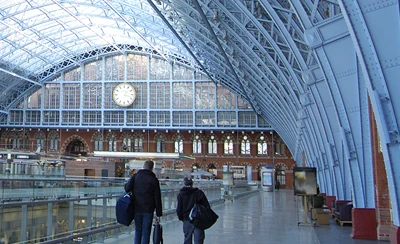
The TPS supports the Government’s intention to encourage development around railway stations, but warns that proximity alone is not enough.
Station-led development will only deliver sustainable travel patterns if it is supported by safe access routes, good interchange, strong public transport connectivity and integrated transport planning.
A collaborative response from the profession
The TPS response draws on insights from practitioners across the transport planning profession.
As one contributor involved in the work said:
“Our response to the draft NPPF reinforces a simple but critical message: if we want planning reform to genuinely deliver healthier, low-carbon and more connected places, transport can’t sit at the edges of policy - it has to shape it.
Through TPS, we brought together honest practitioner insight on where ambiguity still risks slowing progress, and set out clear, practical recommendations to help ensure national policy genuinely supports vision-led planning and reduces car dependency in real-world decision making.
We’re incredibly proud of the collaborative effort behind this work and the impact it can have on elevating transport’s role in shaping better places.”
The TPS is encouraging Government to work closely with practitioners as the reforms move forward, to ensure the planning system can deliver the sustainable, well-connected places the policy intends to create.